If you spend any time outdoors in Kansas, you’ve probably walked past a hackberry tree without realizing it. They’re one of the most common trees across the state, yet most people never think of them as food. That’s a shame, because hackberries are one of the easiest wild edibles to identify, harvest, and enjoy.
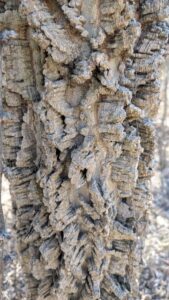
Hackberries (Celtis occidentalis) grow just about everywhere, along fence lines, creeks, and city streets. They’re tough trees that handle drought, clay soil, wind, and just about anything Kansas throws at them. They do not compartmentalize decay well, so be careful with those pruning cuts. The bark has a warty, corky texture that makes them easy to spot once you know what you’re looking for. Their leaves are simple and pointed, a little rough to the touch, and often asymmetrical at the base.
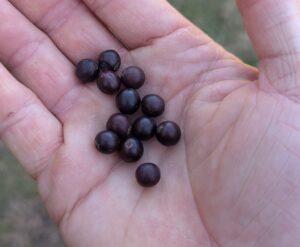
One thing I love about hackberry trees are their berries, those small dark purple fruits that hang on the branches long after the leaves have fallen. My kids love them too! Each berry has a soft outside with a hard pit in the middle. Sometimes the pits can be crushed and eaten, but I usually spit them out. You can eat them right off the tree, crush them into a trail mix, or grind them into a paste for baking. They’re surprisingly nutritious too, offering carbs, fats, and protein.
Native Americans prized hackberries as a trail food, sometimes pounding them into cakes or mixing them with animal fat for long journeys. Early settlers used them the same way because they were lightweight, shelf-stable, and easy to gather. Modern foragers can enjoy them straight from the tree or as an addition to granola or homemade energy bars.
Hackberries ripen in late summer and can hang on well into winter. They’re ready to eat when they turn a deep orange or brown and come off the stem easily. Birds love them too, so you might have to share.
Next time you’re out hiking or exploring, take a closer look at those rough-barked trees along the trail. You might find a ready-made snack that’s been feeding people and wildlife for centuries. No prep, no cooking, just good old-fashioned foraged food.
If you want to learn more about foraging from trees, check out our Tree Care Academy. We host a foraging talk periodically, and you can sign up to get notifications.