
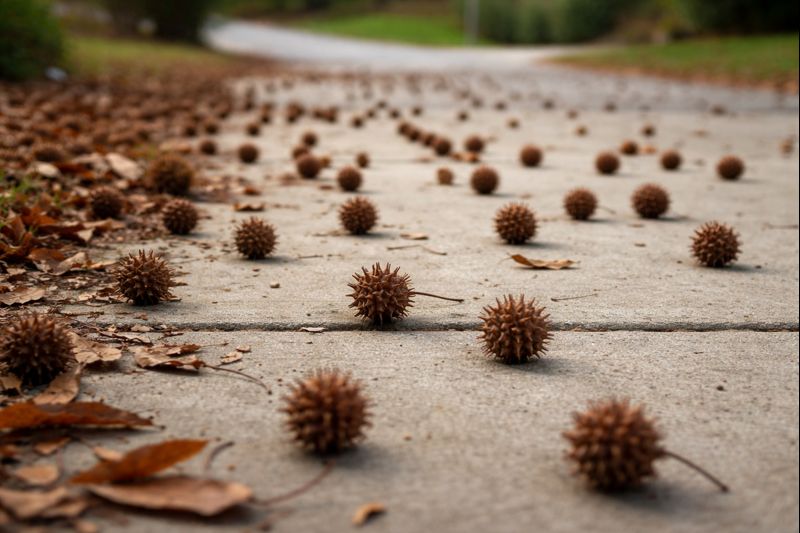
If you like your tree but hate what it drops, you’re not alone. Unwanted fruit drop is a common complaint we hear, especially with callery pear and sweetgum. The mess, the staining, the slipping hazards, and the constant cleanup wear people down fast. In fact, these messes can even reduce the appraised value of a tree!
There are products designed to reduce fruit production. The keyword is reduce. This is not a guaranteed fix, and anyone pitching it as one is skipping some important facts.
Fruit Elimination, and What It Isn’t
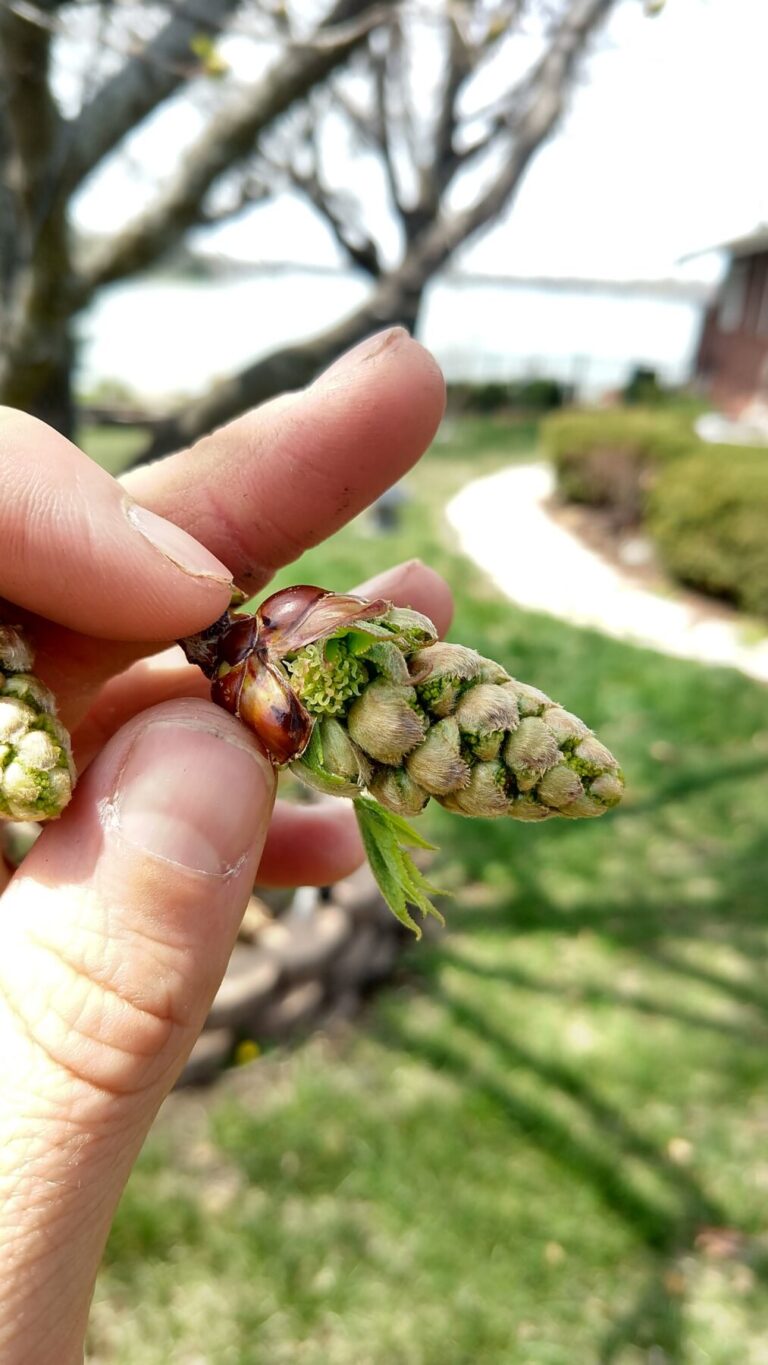
Fruit elimination treatments work by interfering with flower development, so fewer fruits form later in the season. The goal is to target the flowering stage after the bloom is open but before pollination. The chemical mimics a stress hormone, tricking the tree into aborting the flowers before fruit is set. When they work well, homeowners may see noticeably less fruit. When they don’t, results can range from a minor reduction to almost no visible change.
Spray vs Injection
There are two general ways these products are applied, a spray method and a trunk injection method. Both exist. Both can work. Neither is foolproof.
Spray applications are applied directly to the canopy during flowering. This allows the treatment to contact the flowers during a very specific developmental stage.
Injection applications are delivered into the trunk and rely on the tree moving the product internally to the flowers.
Timing Is Everything for Fruit Elimination
The effective window for fruit elimination is roughly three days.
Miss that window and results drop off fast. Even if everything else is done correctly, weather alone can throw off timing. Cold snaps, wind, rain, or delayed flowering can all shift the target faster than a calendar can keep up. This tight timing window is the biggest reason results are mixed. With unpredictable spring weather, this treatment is always our hardest to time and schedule.
Why Spray Tends to Be More Reliable
Spray applications tend to produce more consistent results because timing is more controllable. The product is applied directly to the flowers during that narrow window, so there is less guesswork about whether it arrives at the right place at the right time.
Injections are harder to predict. Once the product goes into the trunk, it depends on internal uptake and movement within the tree. We cannot see or measure how fast that product moves, or whether it reaches the flowers at the exact moment it needs to. That uncertainty makes injections more of a gamble, especially in stressed trees. We are aware of an injection that promises to be more systemic, and we are going to trial it, but the jury is still out.
Callery Pears and Sweetgums
Callery pears and sweetgums are two of the most common trees homeowners ask about for fruit elimination. Both produce heavy fruit loads. When treatments line up just right, fruit reduction can be noticeable. When timing or weather misses the mark, results can be underwhelming. Sometimes we see issues where one half of the tree is ready to spray, but the other is not. Or two trees in the same yard may require different timing.
Set Realistic Expectations
Fruit elimination treatments exist, but they are not guaranteed and they rarely eliminate all fruit. Results vary based on timing, weather, application method, and tree health. Think of it as a calculated gamble, not a sure thing.
If fruit drop is a problem, one of our many arborists can help you decide if this is worth trying on your specific tree, or if there are better long-term solutions to consider. For example, with sweetgum balls, I usually ask if there is a high school kid on the block you could pay to rake the yard multiple times in the fall, which would be a guaranteed way to remove the balls.
