
Bur oaks are generally considered one of the most reliable and durable trees in our landscapes. They tolerate heat, wind, and challenging soils better than many other species. That is why recent increases in bur oaks showing thinning canopies and premature decline are especially concerning. When a bur oak starts to thin, it is usually a signal that something more than normal stress is going on.
Bur Oak Blight: BOB
One of the most common causes behind this decline is bur oak blight, often referred to as BOB. Bur oak blight is a fungal disease caused by Tubakia iowensis that primarily affects mature bur oaks. It has a tendency to progress slowly but persistently, with symptoms becoming more severe each year if the disease is left unmanaged.
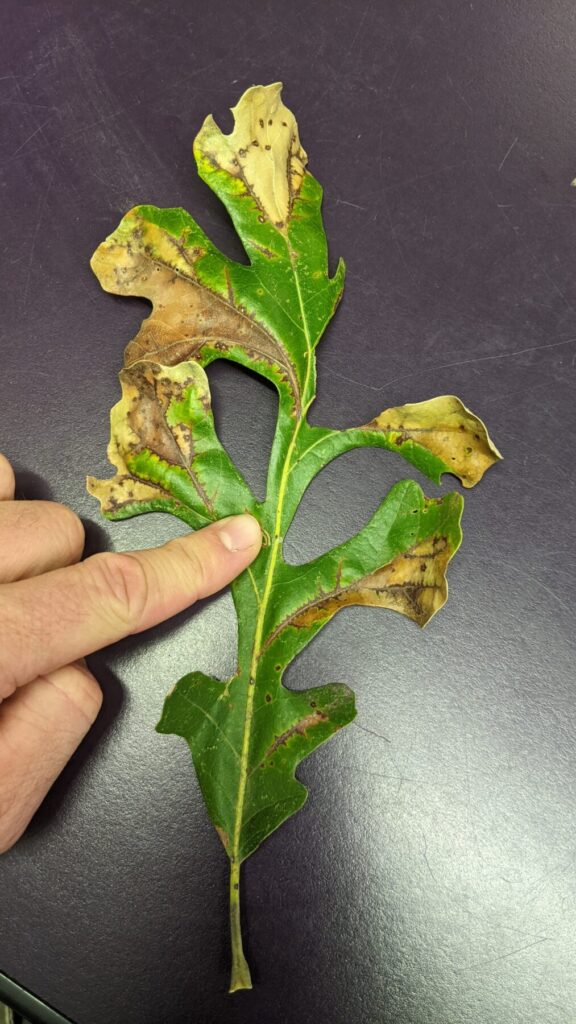
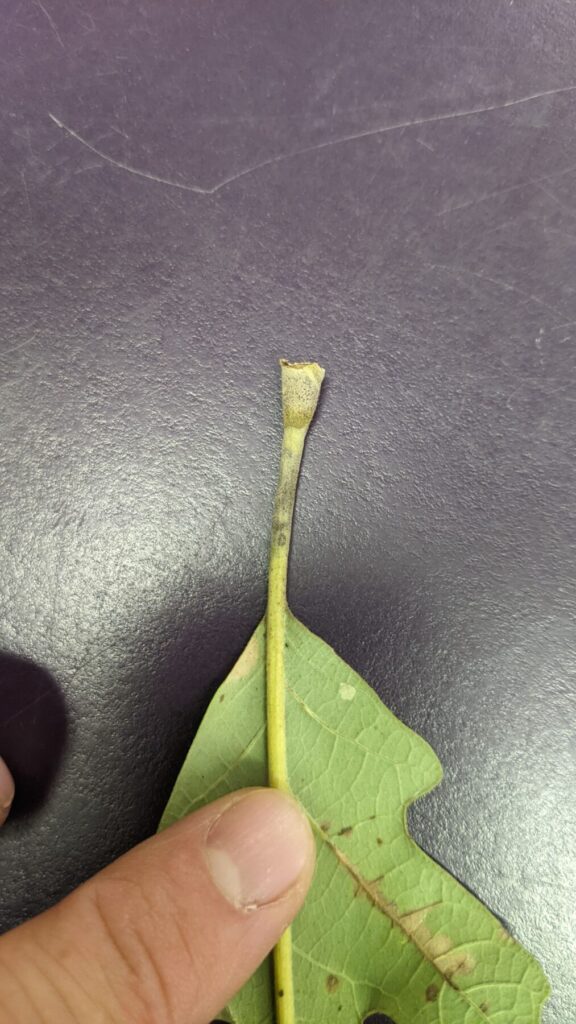
Bur Oak Blight Symptoms
Symptoms of bur oak blight typically become noticeable in late summer. Infected leaves develop dark brown to purplish blotches that follow the leaf veins, especially along the midrib. The tissue between veins often remains green at first, giving the leaves a distinctive patterned appearance rather than random spotting. As the disease progresses, affected leaves often remain attached well into fall and winter rather than dropping normally.
While a single season of infection may not appear severe, repeated defoliation over multiple years can cause significant stress on the tree. Energy reserves are reduced, canopy density declines, and branch tip dieback becomes more noticeable, particularly in the upper crown. Over time, this chronic stress can leave the tree more vulnerable to secondary pests and diseases, accelerating overall decline.
One of the challenges with bur oak blight is that the fungus overwinters in infected leaves that remain attached to the tree. In spring, spores are released from last year’s infected leaves and spread to newly emerging foliage, allowing the infection to repeat itself year after year.
Bur Oak Blight Management
Sanitation and general tree care can help reduce disease pressure. Removing and destroying infected leaves where practical can limit the amount of fungal material available to reinfect the tree. Improving overall tree health through proper mulching, avoiding soil compaction, and managing drought stress can also improve a tree’s ability to tolerate infection and respond to treatment.
Fungicide trunk injections are currently the most effective treatment option for managing bur oak blight. This approach delivers a systemic fungicide directly into the tree’s vascular system, where it is transported upward to protect newly developing leaves. By targeting the infection during the critical spring and early summer period, injections can significantly reduce symptom severity and slow the progression of canopy decline.
Timing is critical for successful treatment. Trunk injections are typically applied at bud break so the fungicide is present as new leaves emerge. Because bur oak blight develops over multiple years, treatment is best viewed as a management strategy rather than a one-time fix. In some cases, it may also be beneficial to include an insecticide treatment to help protect against two-lined chestnut borer, an insect that commonly targets stressed oak trees. Many trees show noticeable improvement within one to two growing seasons when treatments are applied consistently.
Look-a-Likes
Not every bur oak showing leaf spotting or thinning has bur oak blight. Other issues, including anthracnose, environmental stress, and site-related problems, can produce similar symptoms. A proper diagnosis allows treatment efforts to be focused where they will actually help, rather than reacting to symptoms without addressing the underlying cause.
When to take action
Bur oak blight is a manageable condition, but it may not resolve on its own. Early identification, good cultural care, and targeted treatments can significantly slow disease progression and preserve canopy density. If you are noticing late-season leaf retention, vein-based leaf blotching, or progressive thinning in a bur oak, having the tree evaluated sooner rather than later can make a meaningful difference.
Our consulting arborists at Wellnitz Tree Care can confirm whether bur oak blight is present and help develop a treatment plan that fits the tree and the site. Protecting a mature bur oak is almost always more cost-effective than reacting after decline is well underway.
