
Trees make people nervous.
They can get massive, and when they fail, it is often loud and dramatic. A branch through a roof or a trunk across a driveway feels unpredictable and dangerous. Those raw emotions often cause people to overstate tree risk. The risks trees pose are often poorly contextualized and driven more by fear than by data.
That does not mean trees are harmless. Trees fail. People do get hurt. On very rare occasions, people are killed. But when you step back and look at how often that actually happens, and compare it to the risks we accept every single day without a second thought, the picture changes quickly.
The goal here is not to dismiss tree risk. It is to put it where it belongs.
What We Actually Know About Tree Risk Injuries and Death
There is no perfect national database that cleanly tracks how many people are injured or killed by trees due to natural failure. Incidents are scattered across medical records, insurance claims, local news reports, and coroners’ offices. Many events never make it into any formal system at all.
Because of that, any number you see should be treated as an estimate, not a precise count.
A reasonable, best guess is that around 35 people per year in the United States are either seriously injured or killed by trees due to natural failure. That number excludes arborists, loggers, and people intentionally cutting trees (our risk is much higher). It focuses on storms, falling branches, uprooting, and other non-work-related incidents.
Remember, this number is deaths and injuries. The numbers you see later will only be deaths.
Put another way, in a country of roughly 330 million people, the chance of being injured or killed by a tree in a given year is on the order of one in a million.
That is not zero. But it is very small.
Why Tree Risk Feels Bigger Than It Is
Tree failures are memorable. They make the news. Photos circulate. Videos get shared. A fallen tree is tangible in a way that statistics are not. And we have all seen failed trees or tree parts after storms. We think “Wow, if that tree would have hit someone, they would have died!”
There is also a strong psychological factor at play. Trees are external. They feel out of our control. When something outside our house threatens us, even rarely, it triggers a much stronger fear response than familiar, everyday risks.
Fear sells. Exaggerated claims about danger are more emotionally compelling than calm explanations about probability. “This tree could kill someone” lands harder than “this is an extremely low-risk condition.” This is true whether it is a failed tree on the news or an arborist selling tree work.
That does not make the exaggeration accurate.
When and How Trees Actually Fail
Most unexpected tree and branch failures occur during wind events or ice storms. That is not true 100 percent of the time. Calm-day failures do happen, and any experienced arborist has seen them.
But the majority cluster around storms. That matters because human behavior changes during storms.
People go inside.
Exposure drops dramatically. Sidewalks empty. Parks clear out. Roads carry fewer pedestrians. And when people are inside buildings, they are far less likely to be struck by a tree or branch.
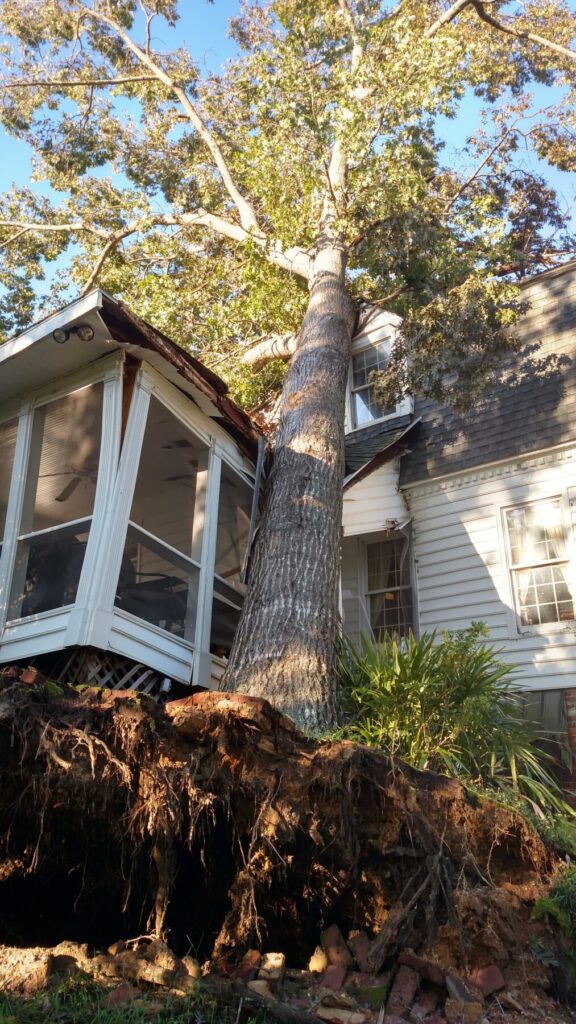
It is also worth noting that while trees do hit houses, most impacts result in property damage rather than fatalities or injuries. Even if a large tree hits a house, the house is likely to protect the occupants. (see the photo above)
Relative Risk
The same year that trees injure or kill an estimated 35 people in the United States:
About 9,000 pedestrians are killed by vehicles. We should be wearing helmets when crossing the street!
Roughly 1,000 people die from heat exposure, and another 1,000 from cold exposure. Better just stay inside!
Around 100 people die each year from wasp and bee stings. Time to get rid of honey!
Approximately 800 people die from same-level falls, slipping or tripping. We need airbag vests!
Nearly 1,500 people die from falling out of a chair, bed, or other furniture. Better sleep on the floor!
Almost 3,000 people die from falling down stairs. Elevators are 100x safer.
About 100 people per year die after being bitten or struck by a dog. Outlaw dogs, cat people only.
Roughly 700 people die from drowning in bathtubs. Everyone needs to take showers now. Do you think that would increase the number of slips, trips, and falls?
Remember, these are deaths only. They do not include injuries. The tree estimate includes serious injuries.
If we applied tree-level fear to bathtubs, we would be taking sponge baths before we started cutting down shade trees.
When Tree Risk Assessment Makes Sense
Tree risk assessment is a valuable service. It is not necessary for every tree near every house.
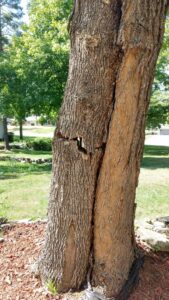
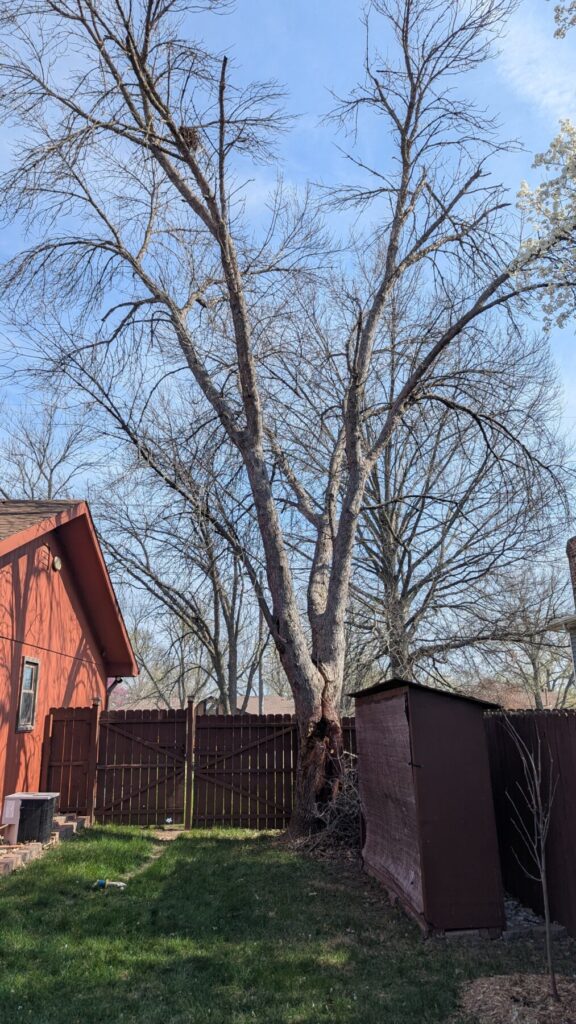
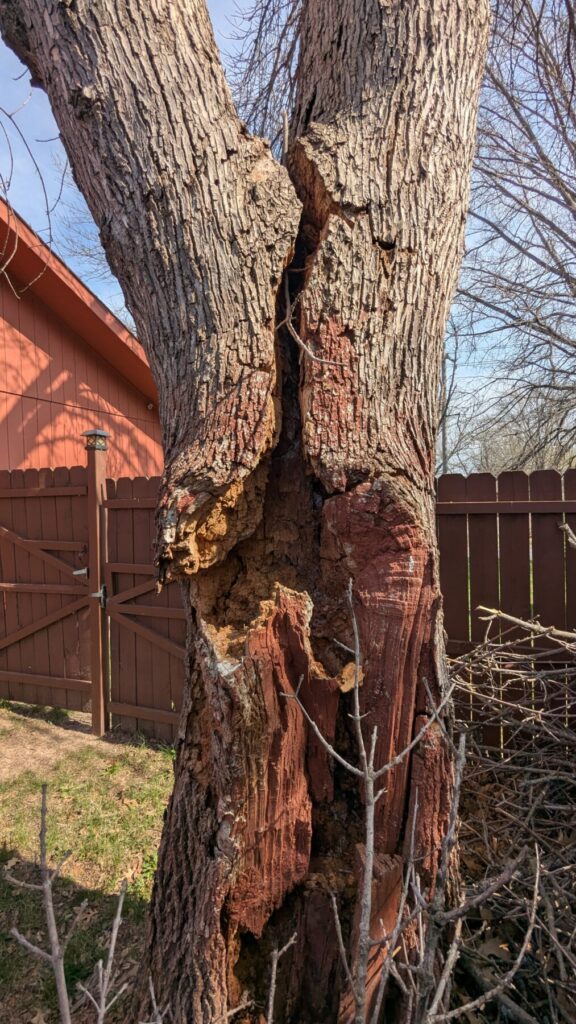
It makes sense when there are obvious or suspected defects, valuable targets, high-use areas, or when property damage is a primary concern. In reality, most trees that pose a risk are very obvious. Those should be removed or mitigated. Most everything else is not likely to kill you or even seriously injure you.
What it doesn’t mean is that every large tree near a home is a silent killer waiting for its moment.
Most trees coexist with people for decades without incident.
And they provide FAR more benifits than they pose risk.
The Bottom Line
Trees are not risk-free. Nothing is.
But they are far less dangerous than we often imagine, especially when compared to everyday activities we barely think about. The numbers are small, the risk is low, and fear-driven decisions often do more harm than good.
If we are comfortable living with stairs, dogs, bathtubs, and cars, we can probably learn to live with trees too.
If tree risk assessments are needed, we can help out with that, but statistically, your tree won’t kill you.
