
Pine Cone Syrup
A surprisingly simple seasonal culinary treat in plain sight
Most people walk past pine trees every day without realizing they’re carrying a springtime ingredient that turns into something genuinely useful. Pine cone syrup is fancy, tastes great, and sounds like a deep-woods survival skill, but the reality is much simpler.
If you can pick up green pine cones, add brown sugar, and wait, you can make pine cone syrup.
No special tools. No weird ingredients (except pine cones). Just patience.
What is pine cone syrup
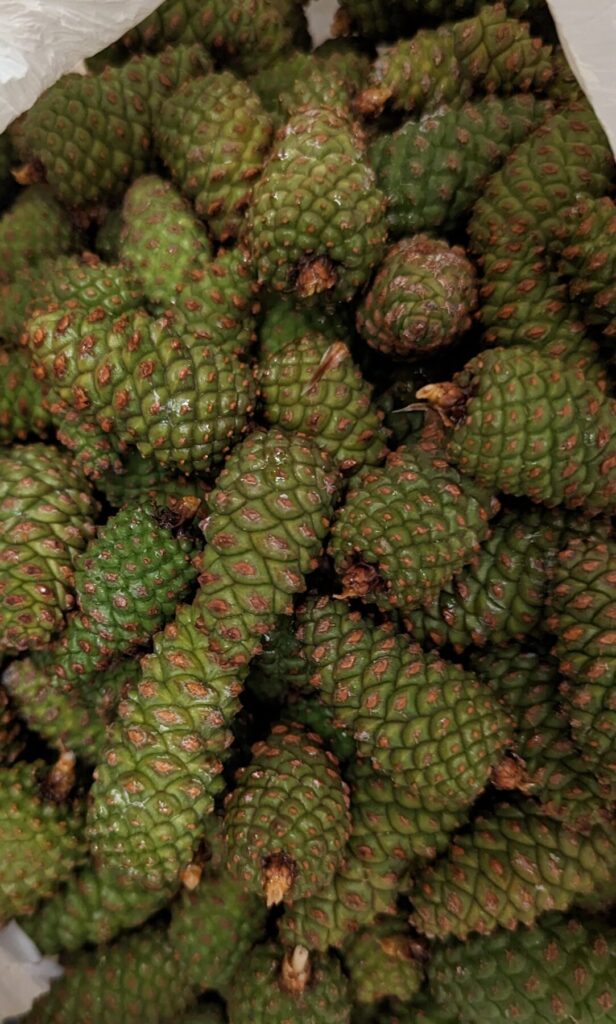
Pine cone syrup is made from young, green pine cones, not the hard brown ones that crunch under your boots in fall. These immature cones are soft, resinous, and full of aromatic compounds. When layered with sugar, the sugar draws moisture and soluble compounds out of the cones. Over time, it creates a thick, dark syrup.
This isn’t fermentation in the beer sense. It’s mostly osmotic extraction, sugar pulling liquid out of plant tissue, with a little natural microbial action along for the ride. Simple chemistry doing what it’s always done.
The result tastes like pine, caramel, and a hint of citrus, depending on species and timing.
When and what to harvest
Timing matters more than almost anything else.
You want cones that are:
Green
Soft enough to cut with a knife
Usually 1 to 2 inches long, sometimes slightly larger depending on species
In much of the Midwest, this is late spring to early summer, but trees don’t read calendars. Look at the cones, not the date. I harvested some Austrian pine cones on May 18th, and they worked great.
Common yard and park pines that work well include:
Eastern white pine
Scotch pine
Austrian pine
Ponderosa pine* In large quantities, this could be toxic
But the traditional pine used for syrup is the Mugo pine. This recipe will also work with spruce and fir cones as well.
Safety Note
This is important, so don’t skip it.
Only harvest cones from trees you know have not been sprayed with pesticides, herbicides, or growth regulators. Avoid trees along busy roads, parking lots, or industrial areas where exhaust and runoff collect.
If you wouldn’t feel good letting a kid chew on the cone, don’t turn it into syrup. Well, maybe you are the type that wouldn’t let your kid chew on any cone, but you know what I mean.
When in doubt, skip that tree. There will always be another one.
The ridiculously easy method
This is the set-it-and-forget-it version.
You’ll need:
Clean green pine cones
Brown sugar
A clean glass jar with a loose lid or cloth cover
- Eventually a pot and a stove
Steps:
Rinse the cones to remove dust and insects.
Cut larger cones in half or quarters.
Add a layer of cones to the jar.
Cover completely with brown sugar.
Repeat layers until the jar is full.
Top with sugar. Always end with sugar.
Cover loosely and set it on a counter or shelf.
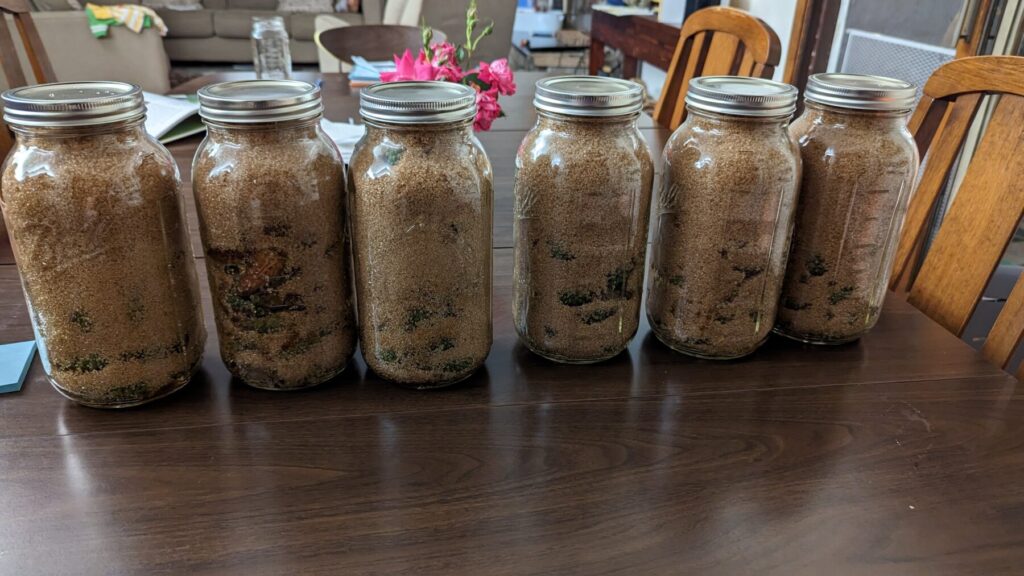
You are looking for a 1:2 ratio by weight, with 1 part cone to 2 parts brown sugar. That’s it. Walk away.
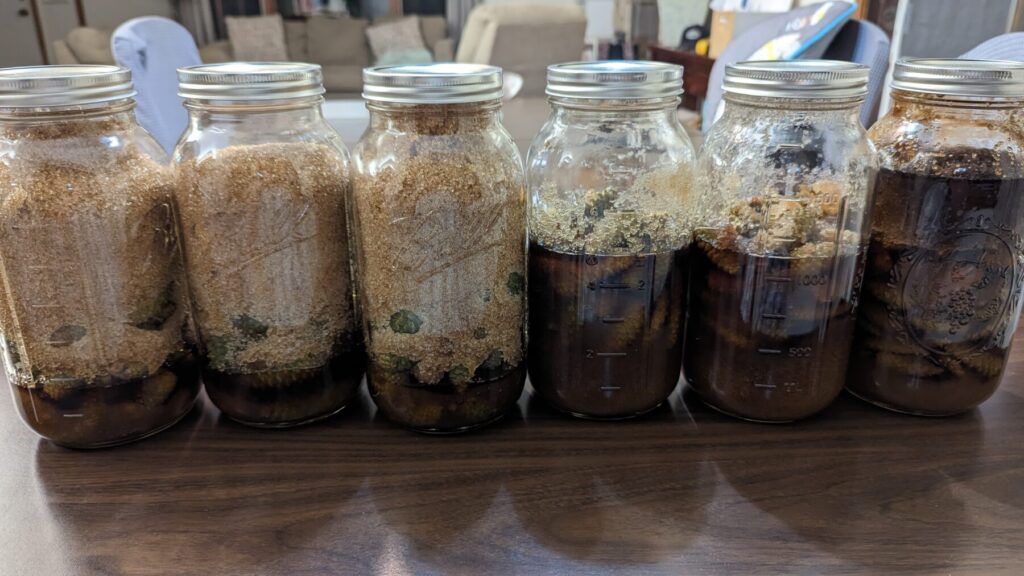
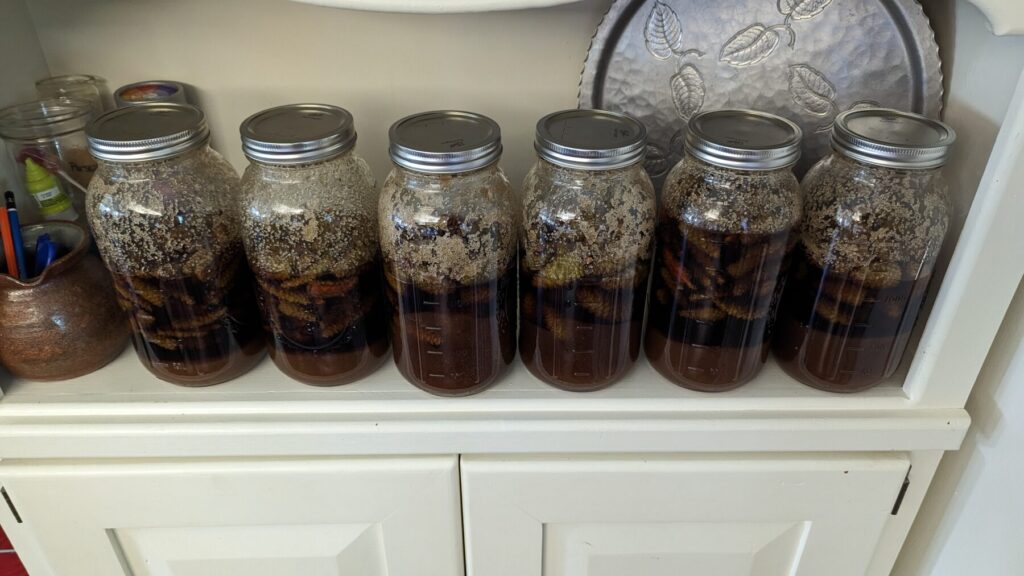
Within a few days, the sugar will start dissolving and turning liquid. Over several weeks, it becomes a dark, pourable syrup. Stir occasionally if you remember. If you forget, it will forgive you.
After about 4 to 6 weeks, dump everything into a pot and add about 2 tablespoons of water for every quart. Heat on the stove to a brisk simmer and strain out the cones and solids. Dont heat too much, only enough to melt the sugar. Otherwise, you will have rock candy. It is best to keep it in the fridge or a water bath can.
What to do with it
This isn’t novelty syrup. People actually use it.
Common uses include:
Drizzled on pancakes or waffles
Stirred into tea
Added to cocktails
Used as a glaze base for pork or chicken
Traditionally, pine syrup has also been used for coughs and sore throats. That’s not a miracle claim, just old-fashioned plant chemistry and soothing sugar doing their thing.
A final word of realism
Not every batch will taste identical. Different pine species, cone size, and timing all matter. That’s not a failure. That’s part of working with real plants instead of factory ingredients.
If your syrup smells good, tastes good, and came from a clean tree, you did it right.
If something seems off, throw it out and give it another try.
