Magnolia scale is one of the largest and most damaging soft scales found in Kansas landscapes. It feeds on sap, weakens trees, attracts swarms of insects, and coats everything underneath in sticky honeydew. We see it most often on star magnolia and saucer magnolia, but other magnolias may be susceptible as well.
While magnolias are tough ornamental trees, they can decline quickly when scale populations explode. This guide explains how to identify magnolia scale, when to treat it, and what long-term management looks like in Kansas.
What Is Magnolia Scale?
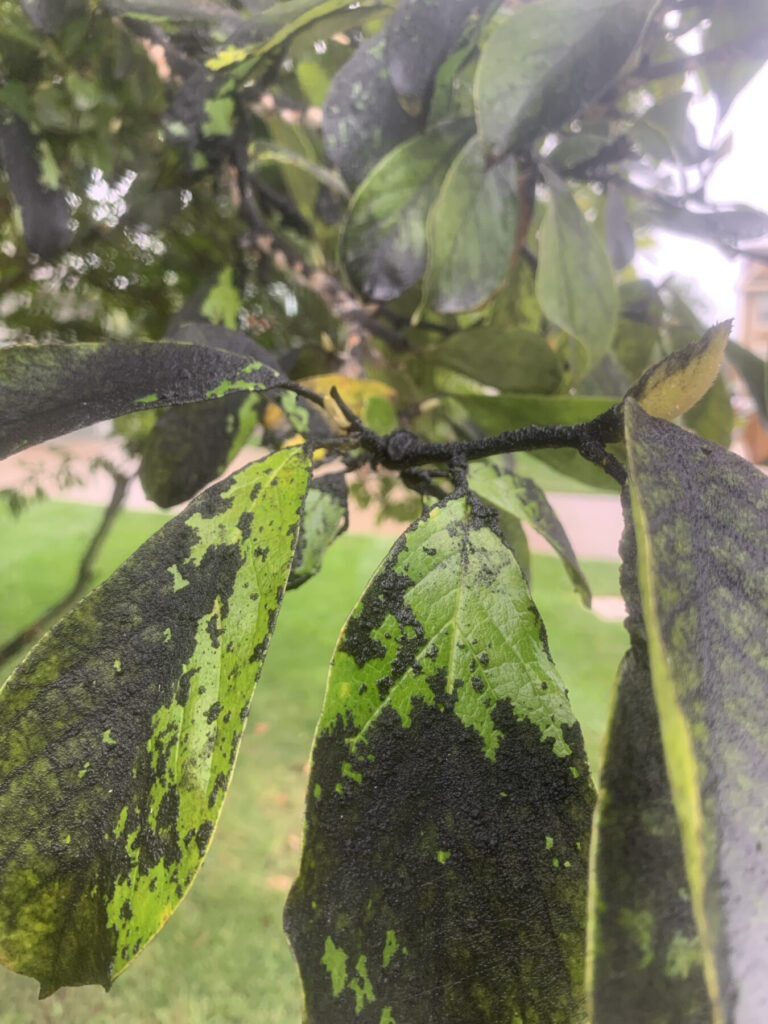
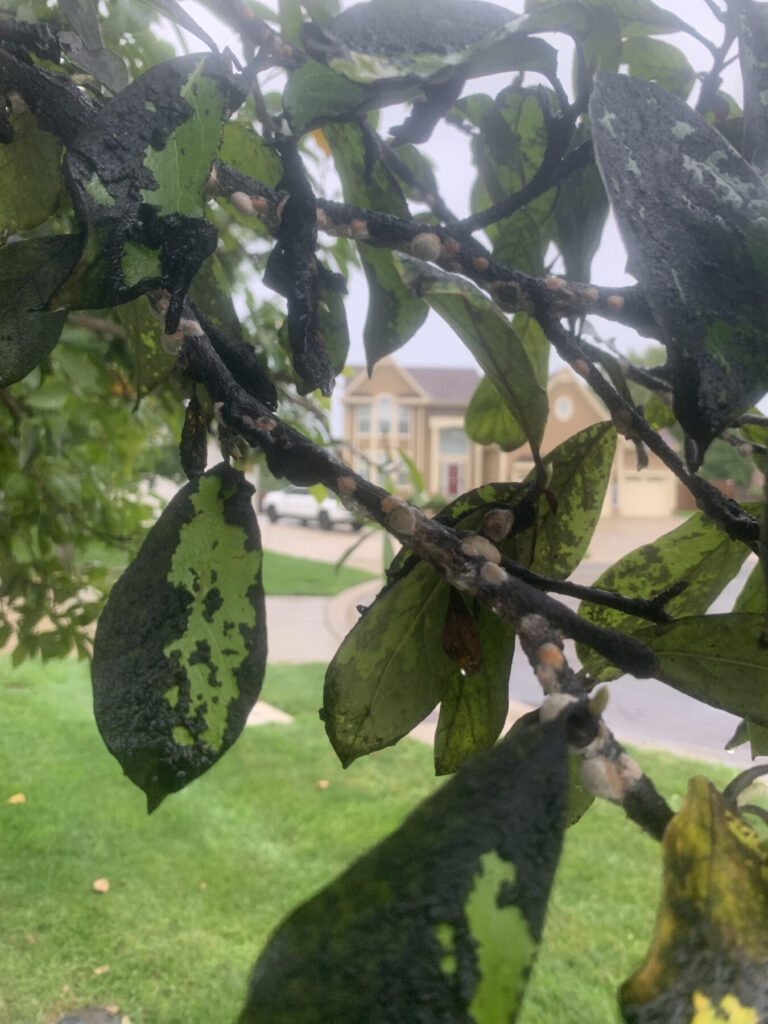
Magnolia scale (Neolecanium cornuparvum) is a soft scale insect that feeds by inserting its mouthparts into twigs and stems to draw sap. As it feeds, it excretes large amounts of honeydew, which attracts ants, wasps, and bees. Honydew also creates the perfect environment for black sooty mold, a fungus that grows on the sugary insect poop, and it is, you guessed it, black.
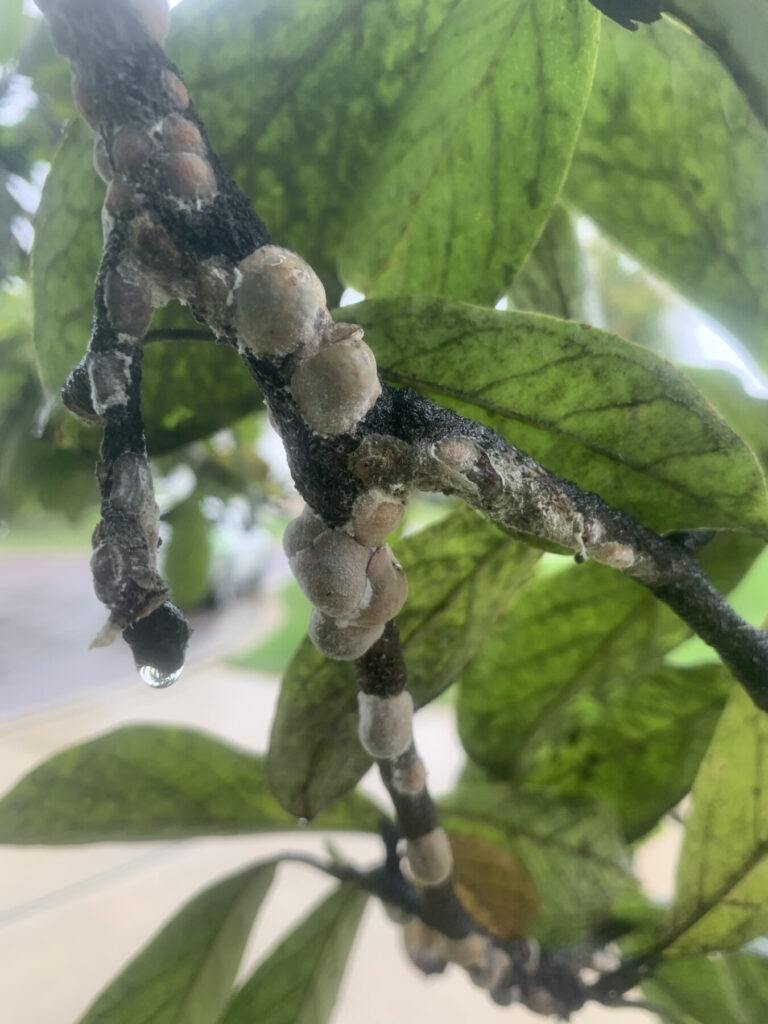
Unlike armored scales, which are usually hard to see, magnolia scales are soft, rounded, fleshy, and large. Mature females are easy to spot because they grow extremely large and produce a waxy coating.
Identification, Signs, and Symptoms
Homeowners usually notice the symptoms first, not the insects.
Look for:
Sticky honeydew on leaves, branches, patios, or cars beneath the tree
Sooty mold
The presence of ants, wasps, and flies feeding on the sugary residue
Declining vigor, thin canopy, and stunted growth
Yellowing leaves due to constant sap loss
To confirm the insect itself, check the twigs:
Adult females are large, oval, and pinkish to brown, with a waxy coating. They look like swollen blisters attached to the branches.
Nymphs (crawlers) are tiny, tan, and mobile. These are the life stage most vulnerable to treatment.
Dead scales often remain attached to the bark for months, so living and dead insects may be mixed together.
Magnolia scale rarely kills a tree outright, but it will absolutely weaken it, open the door to secondary pests, and make a beautiful magnolia look sad and unhealthy.
Life Cycle of Magnolia Scale in Kansas
Understanding the life cycle is key to effective treatment.
In Kansas:
Late spring to early summer: Overwintered nymphs resume feeding.
Mid to late summer: Mature females become very large and begin producing honeydew. This is when homeowners usually notice sticky residue everywhere.
Late summer (August to September): Females give birth to live crawlers. This is the most important treatment window.
Fall: Newly hatched crawlers settle on twigs and begin feeding.
Winter: Scales overwinter as young nymphs on the bark.
The crawler stage is when these insects are exposed and vulnerable.
Monitoring and Timing
Start inspecting magnolias in mid-summer. Look for sticky leaves, shiny surfaces, or black sooty mold.
If you see any signs of scale:
Do not prune immediately.
Contact Wellnitz Tree Care for confirmation and timing guidance.
Keep an eye on the tree in August and September when crawlers become active.
Wellnitz Tree Care monitors crawler development using visual inspections and regional patterns. That’s how we determine the ideal spray window for each property.
Treatment and Management
Magnolia scale responds well to treatment if it is done correctly and timed properly.
1. Systemic insect injections or soil drenches
Trees can be treated in spring with systemic insecticides absorbed through the root system. These are useful for long-term suppression, especially in large or difficult-to-reach trees.
2. Summer and fall foliar treatments
Contact sprays are effective only during the crawler stage. This typically occurs from late August through September in Kansas.
3. Horticultural oil applications
Late fall or early spring oil sprays help smother overwintering nymphs. This is a low-toxicity option and works well when combined with systemics.
4. Pruning heavily infested twigs
If infestations are concentrated on specific limbs, strategic pruning can significantly reduce population pressure. Cuts should follow ANSI A300 standards to protect the tree. This should be done with caution, as it could damage the tree more if done improperly.
5. Improving vigor in the tree
Scale hits stressed magnolias hardest. Improving vigor through watering, mulching, and soil care increases natural resistance.
Expectations:
You will often need two years of treatment to fully break the scale cycle.
Honeydew begins to diminish within weeks of proper treatment.
Full canopy recovery may take a season or two, depending on the extent of damage, once feeding pressure drops.
Long-Term Strategy and Prevention
Magnolia scale tends to return without ongoing monitoring. The best prevention includes:
Annual PHC inspections through programs like ArborThrive
Proper watering during drought
Avoiding high-nitrogen fertilizers around magnolias
Proper mulching to protect roots and reduce stress
Treating the first year aggressively and the second year preventively usually delivers the best results.
Protect Your Magnolias
Magnolia scale can make a beautiful ornamental tree look sick fast, but with proper timing and a science-based treatment plan, these trees rebound well. If your magnolia is sticky, covered in black mold, or attracting insects, it is time to act.
Contact Wellnitz Tree Care to schedule a PHC consultation. Our certified arborists will inspect your tree, confirm the infestation, and build a treatment plan that fits Kansas conditions and the needs of your landscape.
And follow us on Facebook and Instagram for seasonal PHC alerts and Kansas-focused tree care tips.