Japanese Beetles in the Landscape
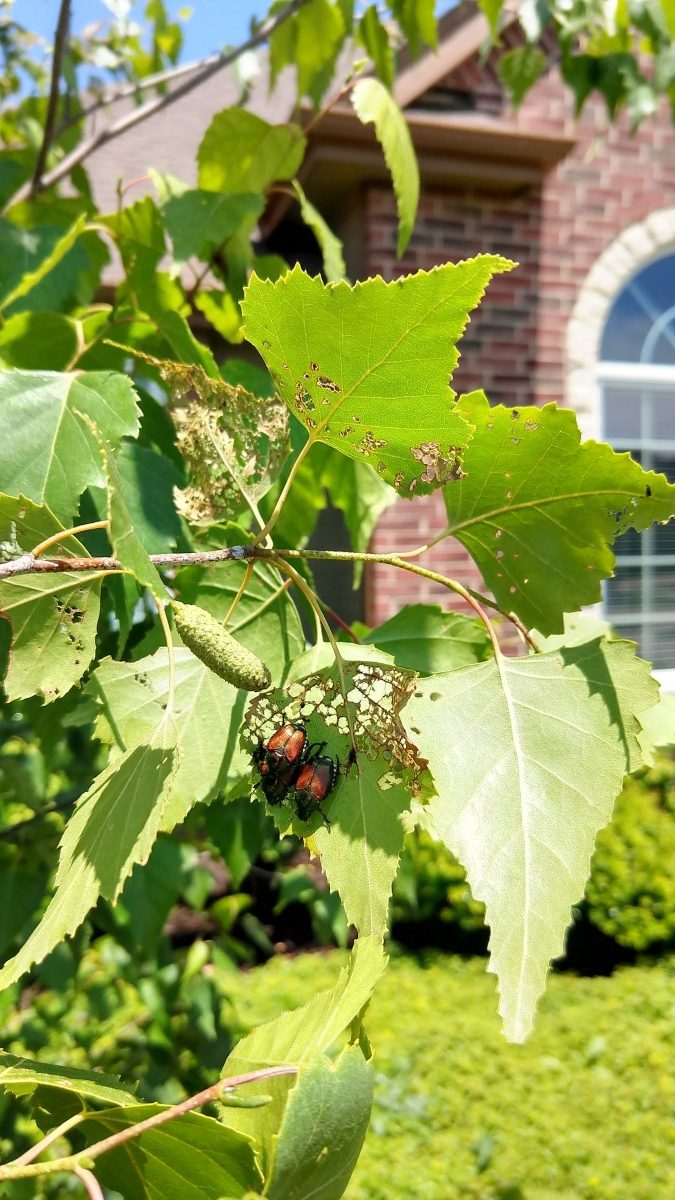
The Japanese beetle (Popillia japonica) is an insect that was introduced from (you guessed it) Japan. While not a pest in Japan, this insect has been a major pest in the United States for the last century. This small beetle feeds on over 300 species of plants as an adult and feeds on turfgrass roots as a grub.
Japanese Beetle Life Cycle
Adult Japanese beetles emerge from the soil in June or July and are active for approximately six weeks during the summer. They begin feeding on trees and shrubs in large groups. They mate and lay 40 to 60 eggs per female. The eggs hatch in the soil, and the larvae begin feeding on plant roots. The larvae overwinter in the soil until the temperatures rise enough to
Japanese Beetle Damage
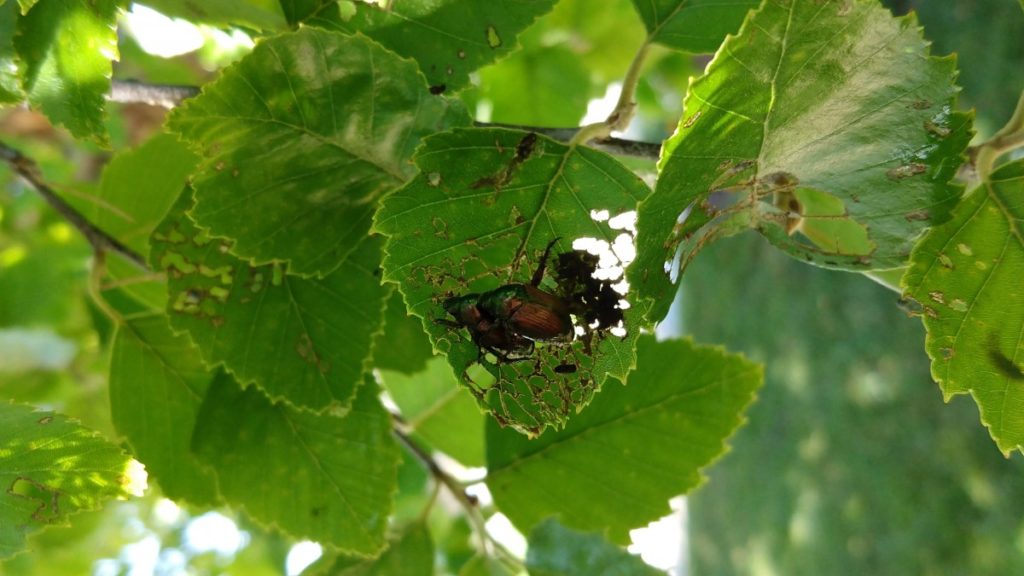
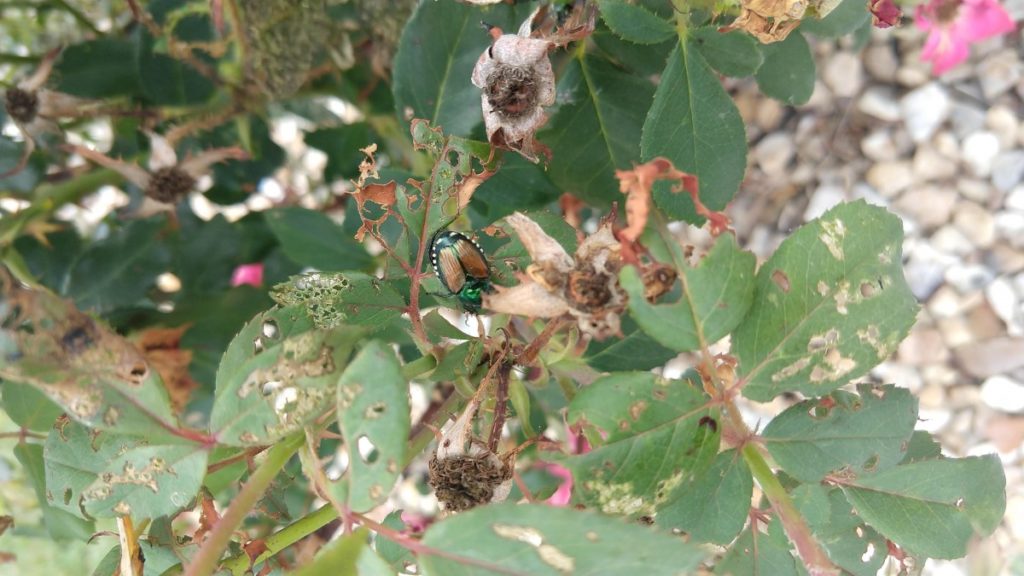
Adults and larvae both damage plants, but grubs typically damage turf grass, so we won’t talk about them here. Adult Japanese beetles feed most actively on warm, sunny days. The beetles eat leaves, leaving only the veins. This type of damage is very distinctive and is known as skeletonization. Skeletonization can stress the tree but rarely leads to or causes death. Japanese Beetles also feed on flowers, which can damage fruit. Most of the damage is aesthetic; however, trees can be almost completely defoliated.
Management
So you have Japanese beetles. What should you do?
- Physical Removal. If you have a small number of beetles, try shaking them off your plant and putting them into a bucket of soapy water.
- Pheromone Traps. These are traps that attract and catch Japanese beetles. Unfortunately, Japanese beetles are clumsy flyers who often miss the trap, land on nearby plants, and continue eating. There is evidence that pheromone traps actually increase plant feeding damage by attracting beetles but failing to capture them.
- Chemical Control. If the invasion of your property is severe, the best option may be chemical control. Adult beetles will fly to find food, so treating your lawn for grubs will not guarantee that your trees will be safe. Wellnitz Tree Care uses several techniques to protect your tree. Systemic insecticides are a good choice if your tree is not attractive to pollinators. If your tree is a popular pollinator destination, we will use a product that protects the good guys while killing Japanese beetles.
- Do Nothing. These beetles do not kill the trees and shrubs, so if you can tolerate the damage they cause, then you don’t need to do anything.
If Japanese beetles have been a problem for you in the past, Wellnitz Tree Care can come out any time to talk about options. We can also come out if or when the beetles are present.
Contact us if you have any beetle concerns, Japanese or not.
For more information, check out these links.