
Ten years ago, we published an article on iron chlorosis explaining why so many oaks and maples in our area turn yellow each summer. The fundamentals have not changed much since then. We still rely on direct trunk injections to deliver iron where the tree can use it. They remain the most effective way to restore green color and energy production in trees growing on our high-pH, limestone-based soils.
What has changed is our understanding of what happens below ground. Soil biology plays a much bigger role than we once realized. While the soil chemistry in our region cannot be changed, we have learned to work with it. By improving soil conditions and supporting the microbes that live there, more of the existing iron becomes naturally available to the tree.
At Wellnitz Tree Care, we now approach iron chlorosis with both tools: the proven injection method for quick recovery, and soil-biology management to sustain those gains.
What Iron Chlorosis Is
Chlorosis means a loss of green color due to reduced chlorophyll. In iron chlorosis, iron is present in the soil but is locked away in a form that trees cannot use. That happens because most of our soils across eastern and central Kansas come from limestone bedrock, which is naturally high in calcium carbonate and pushes soil pH well above neutral. When the pH gets that high, iron binds tightly to other minerals, making it unavailable to the roots.
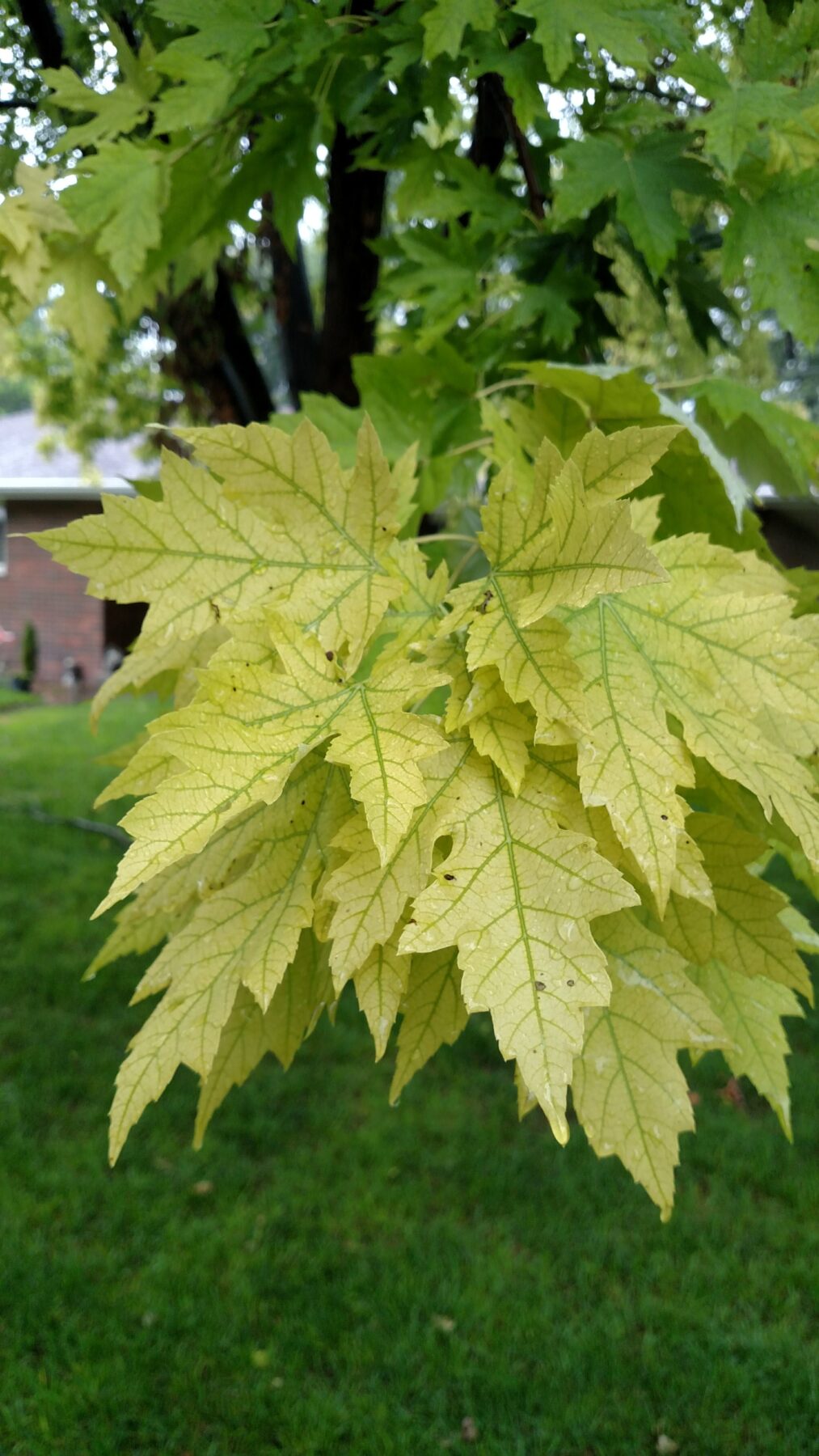
The leaves respond by yellowing between the veins while the veins stay green. Growth slows, leaf size shrinks, and the tree becomes more vulnerable to heat, drought, and secondary insects or disease.
Fixing the Soil Doesn't Work Long-Term
You cannot fight the limestone. Our native soils have a high buffering capacity, meaning that even if you add sulfur, peat, or other acidifying materials, the soil quickly reverts to its original pH. Trying to lower soil pH around a mature tree is expensive and temporary at best. The underlying geology wins that battle every time.
That is why we focus on strategies that work with the soil instead of against it. Direct trunk injections bypass the chemistry problem entirely by delivering iron straight into the tree’s vascular system. From there, the tree can use the nutrient immediately, restoring green color and vigor within weeks.
Soil amendments can still play a role, but they are most useful for improving soil health and microbial activity rather than changing pH. That is where soil biology comes in, and why our modern approach combines injections for fast correction with biology for lasting results.
Tree Injections: The Proven Treatment
Direct trunk injection is the most reliable method for correcting iron chlorosis in established trees. The process delivers soluble iron directly into the tree’s vascular system, following ISA Best Management Practices and ANSI A300 standards. The iron moves through the xylem to the leaves, restoring chlorophyll production and energy flow.
At Wellnitz Tree Care, we perform iron injections right before leaf drop in the fall (or right after if needed). Treating at this stage allows us to safely apply a stronger dose, giving the tree time to take in and store the material for spring growth. This approach produces a spring green-up and results that last much longer than injections done at a lower rate during the growing season.
Soil Biology and Root Health
While injections correct the visible symptoms of chlorosis, long-term results depend on what happens below ground. Healthy soil biology helps trees use more of the iron already present in the soil. Certain microbes can convert iron into forms that roots can absorb, even at high pH.
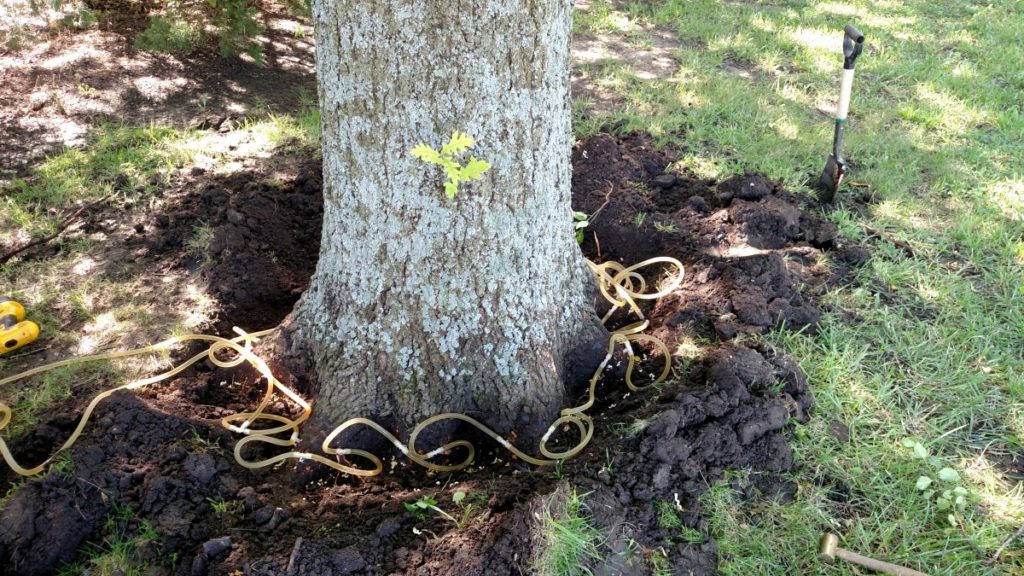
We focus on creating the right environment for those microbes to thrive. While soil disturbance can disrupt microbes, sometimes it is necessary if the soil is compacted. Air spading relieves compaction and improves oxygen flow. Root collar excavation exposes buried flares and removes girdling roots. Adding organic matter or biochar improves soil structure and provides food and substrate for beneficial microbes. Biological inoculants may boost microbial populations that help free up iron. These steps help the soil function more effectively, supporting healthy soil and extending the benefits of injection treatments.
Timing and Follow-Up
Iron chlorosis is not a one-and-done problem. Even with a strong fall injection, trees should be rechecked every two to three years to track color, canopy density, and new growth. When the foliage begins to fade again, it is time for another treatment before stress compounds.
Soil work can be done at almost any time the ground is workable. Air spading, mulchulching, and organic additions are most effective in spring or fall when soil conditions support root growth and development. These steps maintain a healthy soil environment, allowing each injection to last longer and perform better.
Prevention and Species Selection
If you are planting new trees in known high-pH areas, the best prevention is to select species that tolerate those conditions. Choose chlorosis-resistant species such as swamp white oak, bur oak, bald cypress, or ginkgo. Avoid pin oak and red maple unless you are ready for potential ongoing care.
Our consulting arborists can test the soil, evaluate risk, and recommend species that will thrive in your specific site conditions.
Real Results
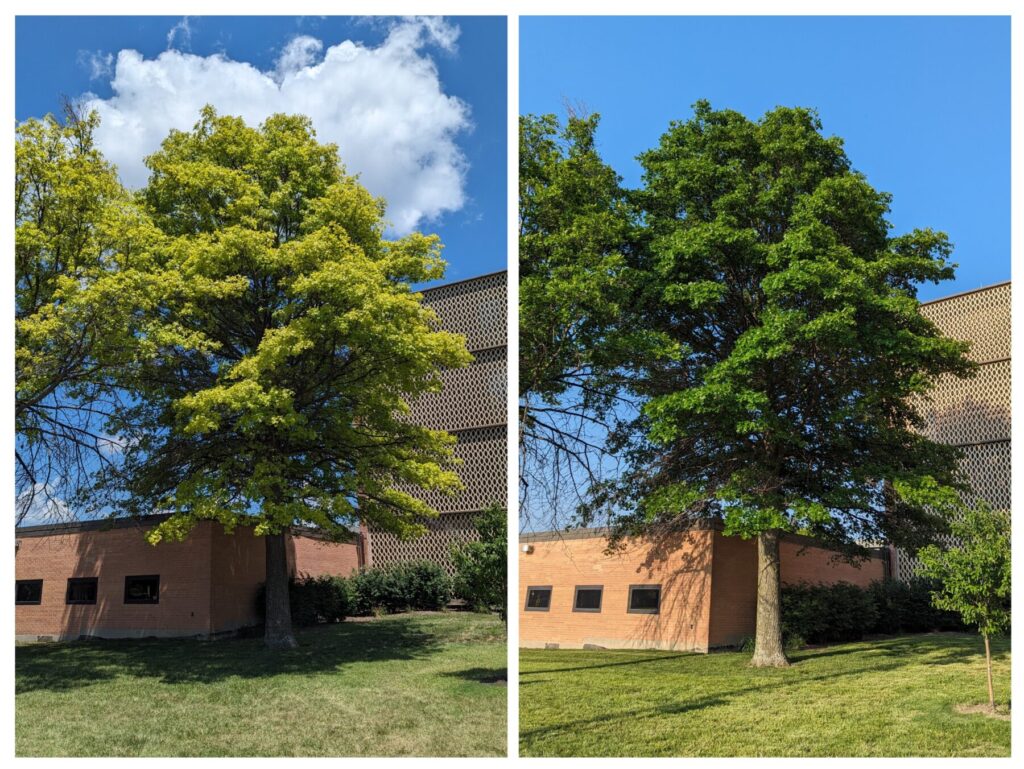
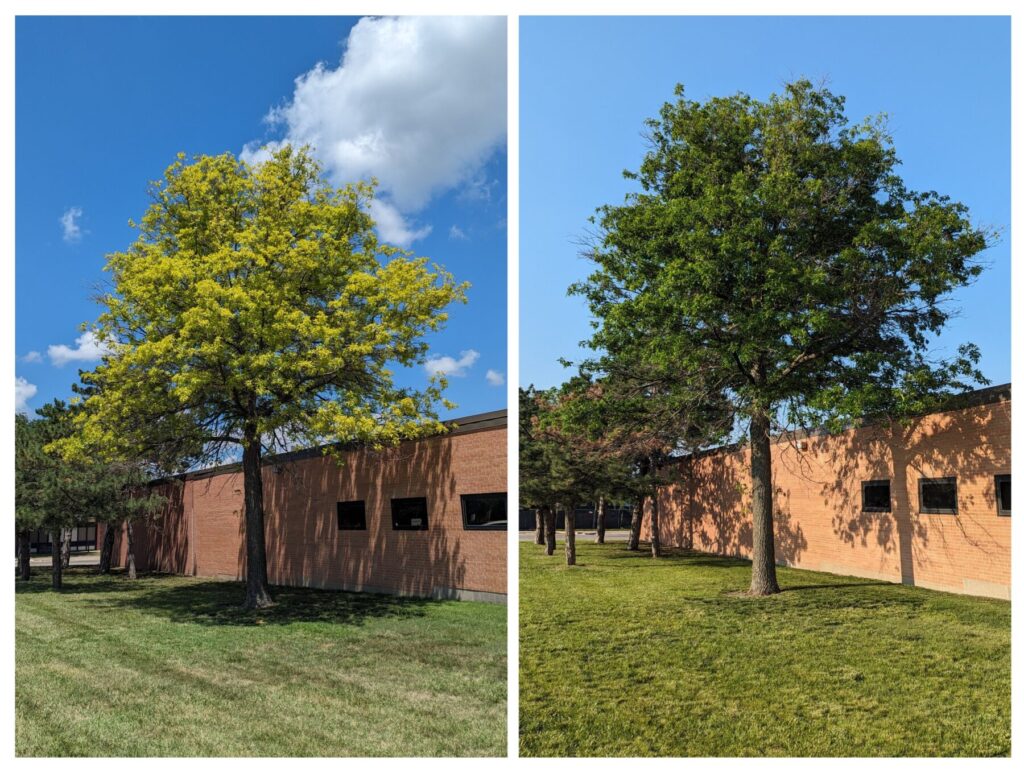
Our before-and-after photos tell the story better than words. These are photos from the fall before treatment and from the following spring after treatment.
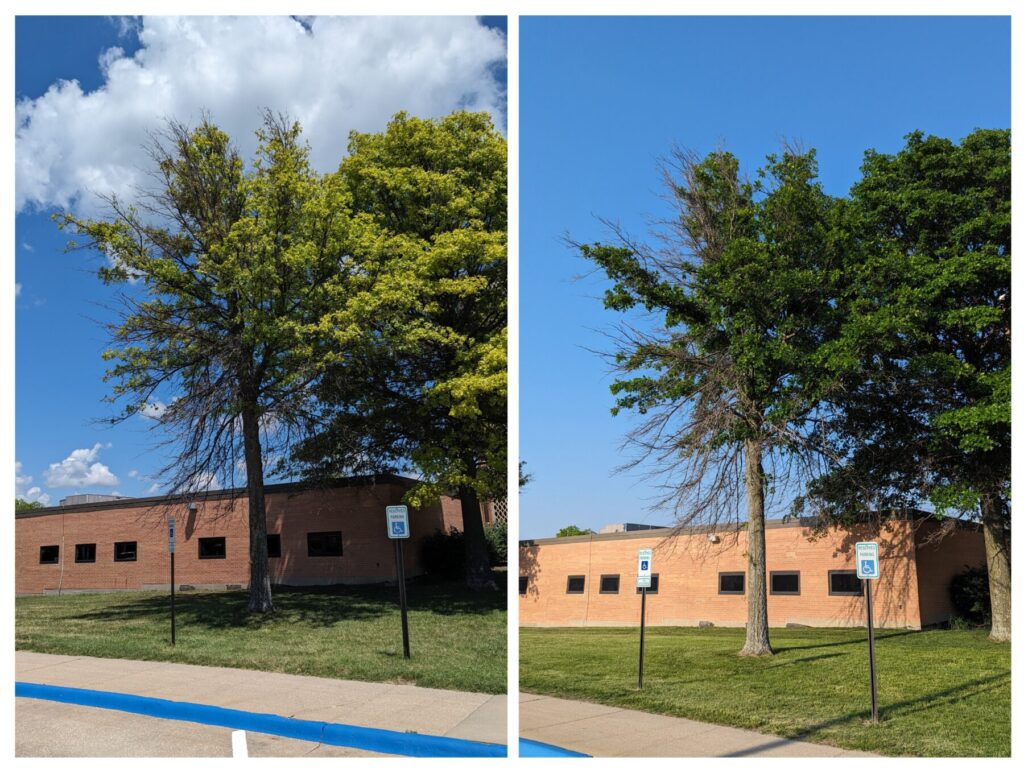
Proven Solutions for Iron Chlorosis
Iron chlorosis is one of the easiest tree health issues to correct when properly managed. Tree injections restore color fast, and good soil biology helps those results last even longer. Together, they provide a reliable, science-based solution for trees growing in our high-pH soils.
If your oak, maple, or any other tree is starting to yellow, contact Wellnitz Tree Care. Our Board-Certified Master Arborists follow ANSI A300 standards and ISA Best Management Practices to diagnose, treat, and monitor chlorosis effectively. Schedule an inspection today and see how quickly your trees can recover.
