
When is the best time to prune trees?
We are often asked, “When is the best time to prune trees?” While I used to just spout out an answer, I have learned that…
It depends.
The answer can vary depending on the desired effects of the pruning and the type of plant being pruned.
When homeowners ask me this question, the first thing I want to know is what they are trying to accomplish. The best time to prune depends on the goal, the species of tree, and sometimes the diseases that are present in the area.
There is not a single perfect time that works for every tree and every situation.
But there are definitely times that make more sense than others.
Start With the Goal of the Pruning
Before talking about timing, it helps to understand why the tree is being pruned. The goal often determines when pruning makes the most sense.
Structural pruning
If the goal is to improve the tree’s structure, the dormant season is often ideal. Once the leaves are gone, it becomes much easier to see the scaffold branches and identify structural issues such as competing leaders or poorly attached limbs.
Dormant pruning allows arborists to clearly see the tree’s framework and make better decisions about which branches should stay and which should go.
Conserving tree energy
If the goal is to remove as little energy from the tree as possible, pruning during the dormant season can also be beneficial. By that point, the tree has already shed its leaves and stored much of its energy reserves for the winter.
Faster wound closure
If someone asks when a tree will close pruning wounds the fastest, that typically happens after the tree has leafed out and is actively growing. During this period, the tree is metabolically active and can compartmentalize wounds more quickly.
Storm damage or safety issues
Sometimes timing does not matter at all.
If a tree has storm damage, broken branches, or limbs hanging over a house or sidewalk, the priority is safety. Hazardous branches should be addressed immediately, regardless of the time of year.
When Timing Matters Most: Disease Risk
There are situations where pruning timing becomes much more important.
In Kansas and much of the Midwest, two of the most common examples are oak wilt and Dutch elm disease. These diseases can be spread by insects that are attracted to fresh pruning wounds.
Because of that, arborists often recommend avoiding pruning certain species during their active disease periods.
I have personally seen situations where powerline companies pruned elm trees during Dutch elm disease season. The following year, many of those same trees ended up with Dutch elm disease. It is difficult to ignore the correlation between the timing of the pruning and the spread of the disease.
This is one of the clearest examples of when pruning timing can make a real difference.
The Biggest Pruning Mistakes I See
Interestingly, the biggest pruning problems I encounter are usually not about timing at all.
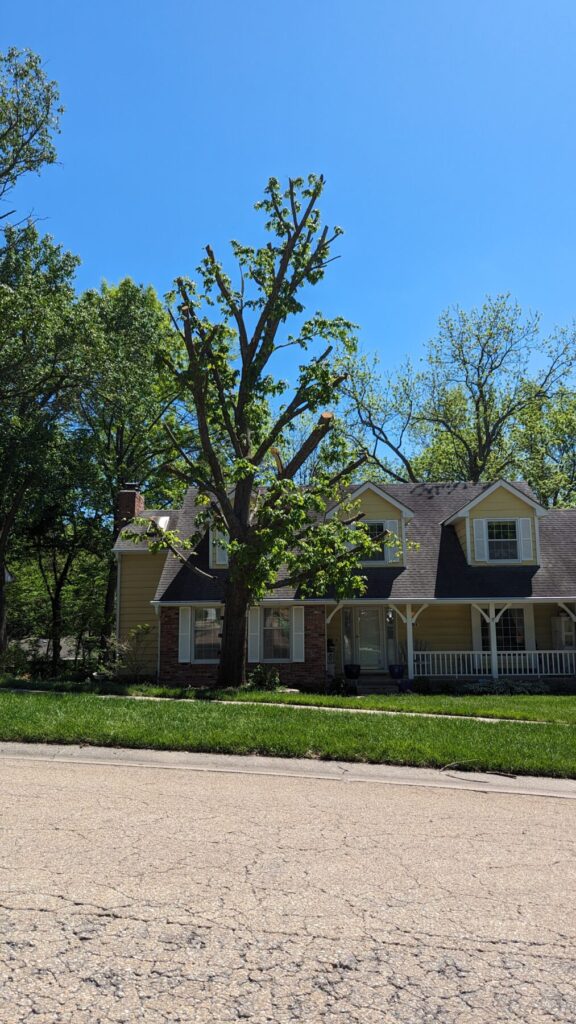
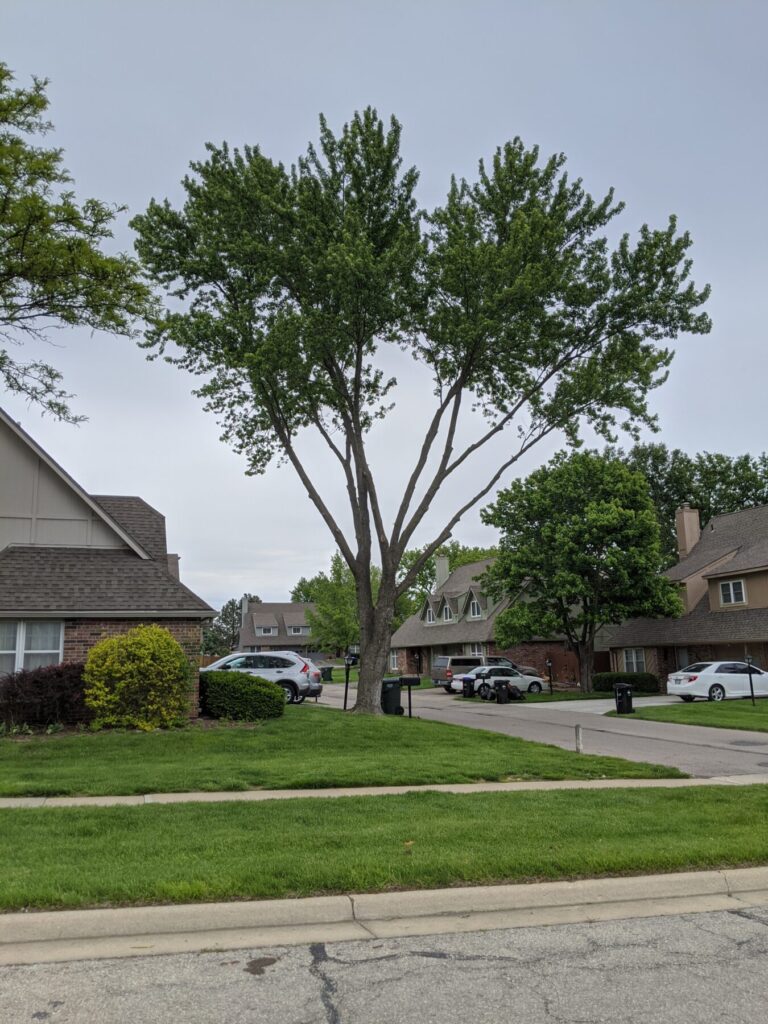
They are about how the tree was pruned. Two of the most common issues I see are Tree topping and lion’s tailing.
Both practices remove the wrong branches and often create structural problems that lead to future failures.
In many cases, a properly placed pruning cut done at a less-than-perfect time is still far better for the tree than severe or improper pruning done at the “perfect time.”
The Reality
For most trees, pruning timing is less critical than people think.
At Wellnitz Tree Care, we prune trees year-round. As long as the work is done in moderation and the tree is generally healthy, most species tolerate pruning very well.
Trees have evolved to deal with broken limbs, storms, and other natural damage. A few well-placed pruning cuts are typically well within what the tree can handle.
Good pruning technique and reasonable pruning amounts usually matter more than hitting the perfect month on the calendar.
A Practical Rule of Thumb
If you are trying to decide when to prune a tree, these guidelines usually work well.
- Dormant season is ideal for structural pruning
- Avoid pruning species that are vulnerable during active disease windows
- Remove dead, damaged, or hazardous branches immediately
- Focus on proper pruning techniques, not just timing
If you are unsure about the timing for a particular tree, it can help to have a certified arborist evaluate the tree and discuss the goals for the pruning.
Because when it comes to pruning trees, the honest answer still holds true.
It depends.
Need Help Deciding When to Prune Your Trees?
Every tree is different. The best pruning plan depends on the species, the condition of the tree, and what you want the tree to do in your landscape.
If you want professional guidance, our certified arborists can evaluate your trees and recommend the right pruning approach.
